Tabah Research has a research partnership with University College London (UCL) through its Institute for Innovation and Public Purpose’s ‘The Islamic Public Value’ project, which develops a model of public value grounded in Islamic ethical principles. The partnership brings scholars together around one question: how the principles of the Islamic tradition can order the life of a society today.
For Tabah Research, the partnership follows directly from its Classification of the Sciences project, which seeks to reinforce the importance of the ordering of sciences for social organisation. This partnership takes the same question into social life, and brings it into conversation with UCL’s research on public institutions.
The partnership has covered four activities so far: a co-published book, an international workshop, a book launch and a chapter by Dr Karim Lahham in UCL’s own volume on Islamic public value. The workshop and the launch took place on the same day, so they are described together below.
A co-published book: The Islamic Social Order and its Frameworks
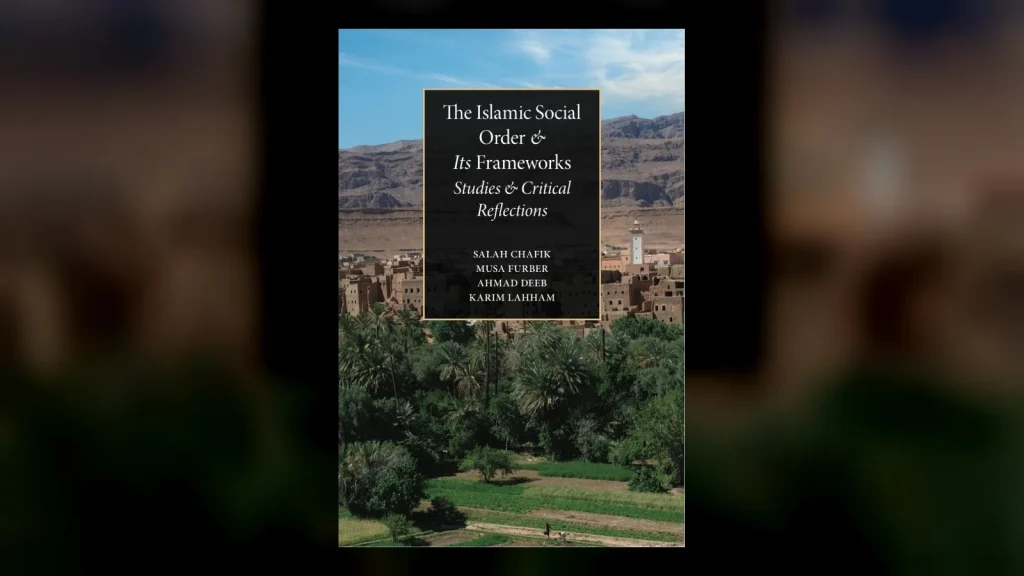
In May 2025, Tabah Research and UCL co-published “The Islamic Social Order and its Frameworks: Critical Studies and Reflections”, with the support of the Islamic Public Value project. The book is the third publication of Tabah Research’s Classification of the Sciences project and its aim is to recover and develop practical notions of the common good within an Islamic social order.
The book opens with an introduction by Dr Salah Chafik, Senior Research Fellow at UCL and comprises three studies:
- “Shuʿab al-Īmān and Social Cohesion: Crafting Ethical and Just Communities”, by Musa Furber.
- “Staying Human: Towards a Muslim Philosophy of Belonging and Community”, by Ahmad Deeb.
- “Farḍ al-Kifāyah as the Juridical Foundation of the Islamic Social Apparatus”, by Dr Karim Lahham.
A day in Cairo: the international workshop and the book launch
The workshop and the book launch took place on the same day in Cairo, in May 2025.
The workshop
The day opened with a one-day international workshop on the social system in Islam. Academics from different parts of the world took part. Each of the three studies in the book was presented and then answered by a respondent, so that every paper met a second reading on the same day.
The book launch
In the evening, Tabah Research and UCL launched the book together. The host placed it within the Classification of the Sciences: that project is theoretical, and this book is the first step in taking its principles into lived reality. Dr Salah Chafik, who wrote the book’s introduction, explained that UCL’s field of public administration has moved away from reading society through the logic of the market and towards the idea of public value, which he related to the Islamic notion of maṣlaḥa and the common good. The three authors then presented their studies.
A chapter in UCL’s volume Islamic Public Value
Dr Karim Lahham, Senior Research Fellow at Tabah Research, contributed chapter 5 of “Islamic Public Value: Theory, Practice, and Administration of Indigenous Cooperative Institutions”, edited by Wolfgang Drechsler, Salah Chafik and Rainer Kattel and published by Edward Elgar in the series Policy, Administrative and Institutional Change.
This open-access chapter looks at the water-sharing system of the Huerta, the irrigated farmland around Valencia, built and run by Muslims between the eighth and fourteenth centuries. It places its irrigation system within the filāḥa tradition and the Islamic idea of serving the common good, arguing that agriculture, like every science in the Islamic tradition, rests on metaphysical principles, providing a practical case for the theoretical framework defended by the Classification of the Sciences project.
Read the chapter: https://doi.org/10.4337/9781035333646-7